What a Glueless Wig Is and How It Stays On Without Adhesive
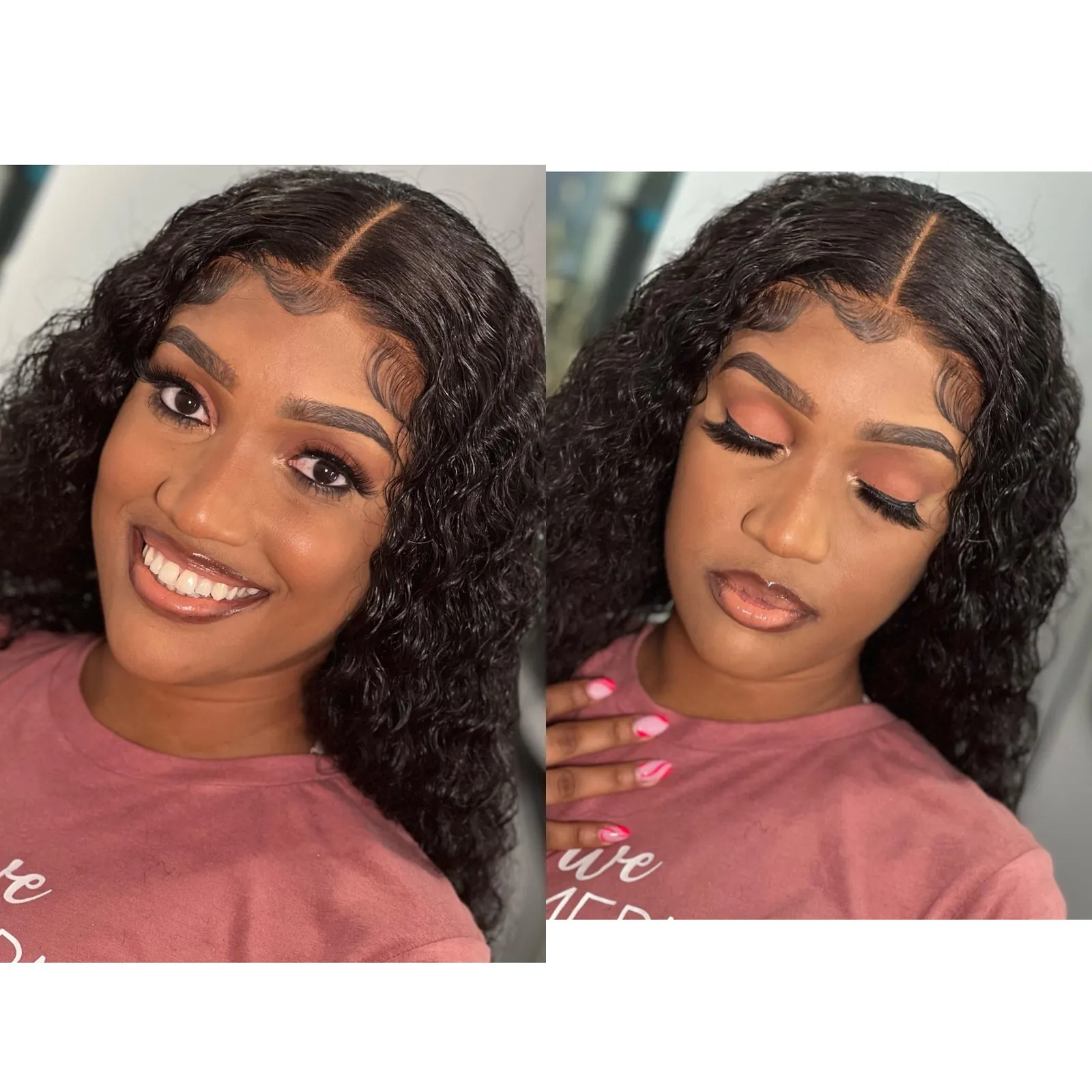
Half the people who sit in my chair for a glueless install have been told it will slide off the first time they turn their head. It will not, if the wig is built for it and fitted to your head rather than to a mannequin. The other half have been burned by adhesive, literally, and want their edges back.
A glueless wig is a lace wig made to stay on through fit alone: a cap sized to your head, an elastic band across the back of the crown, adjustable straps at the nape and combs or clips at the sides, with no glue, gel or tape on your skin. In my studio the glueless wig install is $150, takes 2 hours, and gives you a custom fit you can take off at night and put back on yourself in the morning.
What a glueless wig is
A glueless wig is any lace wig that holds itself on your head without adhesive. The hair and the lace are the same as a regular lace closure or lace frontal; the difference is in the cap. A glueless cap is cut to a measured size, has an elastic band sewn across the inside from ear to ear, has adjustable straps so you can tighten it, and has combs at the front and sides to anchor into your braided hair.
Those features are what the word glueless means. A wig without them is not glueless, it is just a wig you have not glued yet. That distinction matters when you shop, because plenty of listings use the word loosely. Check the cap photos. If you do not see an elastic band and adjustable straps, assume you will need adhesive to keep it flat.
Glueless closure versus glueless frontal
Both exist. A glueless closure wig has a 4x4, 5x5 or 6x6 lace square at the front and a solid wefted cap behind it, and it is the easiest glueless wig to wear because the cap holds firmly on three sides. A glueless frontal wig has lace across the whole front and relies on the elastic band to keep that lace tight against your hairline. Both work; the closure is more forgiving if your head shape is hard to fit.
What glueless is not
Glueless does not mean no prep. Your own hair still has to be braided flat or slicked down, you still wear a wig cap in most cases, and the lace still has to be cut, bleached and plucked to look like skin. Glueless removes the adhesive step, not the customization.
How a glueless wig stays on without adhesive
Four things hold a glueless wig: the measured cap, the elastic band, the straps and the combs. Any one of them alone is not enough. Together they grip from four directions, and a wig that is pulled evenly from four directions does not move.
The cap size
A standard cap is about 22.5 inches around. Heads run from about 21 inches to 23.5, and a half inch of slack is the difference between a wig that sits and a wig that creeps back. A glueless install starts with measuring your head and taking the cap in or letting it out so the circumference matches. This is the step most home installs skip, and it is the reason most home glueless wigs slide.
The elastic band
The band runs inside the cap from one temple to the other across the back of the crown. When the wig is on, the band pulls the front lace back and down against your hairline, which is the job glue normally does. The band should be snug enough to hold the lace flat with your head tilted forward, and loose enough that you forget it is there after ten minutes. Too tight gives you a headache by lunch and strains your edges; too loose lets the lace lift.
The adjustable straps
Two straps at the nape let you tighten the back of the cap. They fine tune the fit after the band does the heavy work. I set them on install day, and you leave them alone unless your braid pattern changes.
The combs
Combs at the front and sides slide into your cornrows and lock the wig to your own hair. They stop forward and sideways movement. If you have thin edges, I position the front comb behind the hairline rather than on it, so the comb grips braid instead of baby hair.
Why the braid down is the fifth thing
A flat, tight braid down under the cap gives the combs something to grip and keeps the cap from riding on a bump. Hair that is braided loose, or left out under a stocking cap, lets the cap shift. If your hair is short or you prefer not to braid, a slicked down and wrapped base works too, but braids give the combs the most to hold.
Why people choose glueless, and where it falls short
Clients come to glueless for their edges and stay for the convenience. The convenience is real: you can take the wig off tonight, wash your scalp, sleep in a bonnet without the wig, and put it back on in two minutes tomorrow. The edge benefit is real too, because adhesive and the alcohol used to remove it are the two things that thin hairlines fastest.
What glueless gives you
- No adhesive on the skin, so no reaction, no residue and no removal solvent.
- Nightly removal, which means your scalp breathes, you can wash your own hair, and the wig lasts longer because it is not slept in.
- Easy reinstall. Once the cap is fitted, putting it on is a matter of lining up the hairline and clipping the combs.
- Works with a sensitive scalp, with eczema, with a fresh relaxer and with hair you are growing back.
- Lower maintenance between appointments. There is no glue line to clean, re melt or redo.
Where it falls short
- The lace sits on the skin, not in it. A glued lace melts; a glueless lace lays. Up close the edge of the lace can be visible on a glueless install, especially on a frontal worn off the face.
- High ponytails and slicked back styles are harder, because nothing is holding the lace down at the temples except tension.
- Fit is everything. A glueless wig that is a half inch too large will move, and no band fixes that.
- Sweat and sleep are its enemies. A hard workout or a night in the wig loosens the band's grip and the braid down under it.
For most daily wear in a middle or side part, those limits do not matter. For a slicked ponytail at a wedding, I would rather glue.
Can a glueless wig be glued down?
Yes. A glueless wig is still a lace wig, and lace takes adhesive. Plenty of my clients wear the same unit glueless most of the week and ask me to melt the front lace for a special occasion. The band and combs do not get in the way; they just stop doing the holding.
Two cautions. First, once you glue the hairline you are back to adhesive removal, so the edge protection you bought the wig for is paused until you take it off properly. Second, a glueless cap that has been tightened to grip on its own can pucker at the front once the lace is glued flat, so I loosen the straps a notch before I lay adhesive. If you plan to glue often, it is cheaper to own a regular lace unit for that and keep the glueless wig for daily wear.
The reverse is often true as well. A regular lace front wig can be installed glueless if the cap fits well and can take a band. Send me a photo of the inside of the cap before you book; the custom fit in my glueless install is built around the unit you bring. See how that compares to a glued lace frontal install before you decide.
How to choose a glueless wig
Buy for the cap first and the hair second. A beautiful unit on the wrong cap will spend its life in a drawer. Here is the order I use when a client sends me listings.
- Measure your head. Run a soft tape from your front hairline, over the crown, to the nape, and then around the circumference just above the ears and across the hairline. Most people land between 21 and 23.5 inches around. Buy the cap size closest to your number, and plan to have it taken in if you fall between sizes.
- Pick your hair type. Human hair can be bleached, flat ironed and restyled, and it is what I recommend for anything you will wear more than a few weeks. Synthetic hair holds a set style and costs less, but it cannot take heat the same way and shows wear sooner.
- Decide on density. Around 150 to 180 percent looks like real hair at the part. 200 percent and up is a fuller, more glam look, but it is heavier on the band and harder to make the lace disappear.
- Choose texture and length. Straight and body wave show lifting lace more than curly textures do, because the hair hangs away from the hairline. Longer units weigh more and pull on the straps, so a 24 inch straight unit needs a tighter fit than a 14 inch bob.
- Check the cap features. You want an elastic band already sewn in, adjustable straps, combs at the front and sides, and a lace that matches your skin tone. HD lace lays flatter but tears sooner; transparent lace lasts more reinstalls.
If the listing says glueless but the cap photos show no band, send it to me before you buy. Whether a unit without a band can be fitted glueless depends on its cap, and the cap still has to be close to your size.
What my glueless install includes
The glueless wig install at my Springfield Gardens studio is $150 and takes 2 hours. It uses no glue or tape, it is fitted to your head, and you leave knowing how to take it off and put it back on yourself.

Fit is the part people pay for. I measure, take the cap in where it needs it, set the band and the straps, and position the combs where your hair can hold them. Then I braid your hair flat, lay the wig, cut the lace to your hairline and style the unit. Before you leave I take it off and put it back on with you watching, so the first time you do it alone is not a guess.
| Install | Price | Time | Adhesive | Best for |
|---|---|---|---|---|
| Glueless wig install | $150 | 2 hours | None, no glue or tape | Daily wear, sensitive scalp, nightly removal |
| Closure wig install | $130 | 2 hours | Yes | Melted part, worn down with a part |
| Lace front wig install | $140 | About 2 hours | Yes | Slicked back styles, ponytails, any part |
| Lace wig reinstall | $140 | 90 minutes | Yes | A unit I have already customized |
The glueless install costs $20 more than a closure install because the cap work takes longer than laying glue does, and because the result is reusable: once the cap is fitted, you can reinstall at home without paying for a reinstall. For many of my clients it pays for itself inside a month. My wig install page lays the whole menu out side by side.
Wearing a glueless wig day to day
The routine is short: on in the morning, off at night, washed every week or two. Doing those three things on schedule is what keeps the wig and your own hair in good shape.
Putting it on
Smooth your braids or wrap, pull a wig cap on if you use one, hold the wig by the ear tabs and set the front lace at your hairline first. Pull the back down over your nape, clip the combs into your braids, and check the band is sitting across the back of your crown, not riding up. Lay the edges with a small amount of gel on your own hair, not on the lace.
Taking it off
Unclip the combs, lift from the nape forward, and never pull from the lace. Set the wig on a stand or a canvas head so the cap keeps its shape and the band keeps its tension. Tie your own hair down for the night and let your scalp breathe.
Washing and storing
Wash the wig every one to two weeks of wear with a sulfate free shampoo, condition from the mid lengths down, and let it air dry on the stand. Wash your own hair and scalp on the same schedule; this is the single biggest advantage over a glued install, so use it. Store the wig on the stand, out of direct sun, with the hair combed through and the straps left as I set them.
Sleep, gym and weather
Take it off to sleep. If you must keep it on, a satin bonnet over the wig keeps the hair from matting, but the band will loosen overnight and the braids underneath will flatten unevenly. For the gym, tighten the straps one notch before and loosen them after. In summer, sweat under the cap is the usual reason a glueless wig shifts; a thin wig cap that wicks helps, and so does a fresh braid down every two to three weeks.
Get fitted for a glueless wig in Springfield Gardens
If you have been fighting a wig that slides, or your edges have had enough of adhesive, bring your unit in and let me fit it. The glueless wig install is $150, takes 2 hours, and ends with you taking the wig off and putting it back on yourself before you walk out.
Tyca Beaute is at 146-20 232nd St in Springfield Gardens, Queens, by appointment only. Book at the booking page with a 20% deposit and you will get an email confirmation; you can reschedule up to 72 hours ahead. Questions about whether your unit can go glueless, call (973) 963-7449. The studio is open Wednesday through Sunday, and the Q111 stops about three minutes away.
Questions readers ask
Will a glueless wig stay on during a workout?
A properly fitted one will stay on through a normal workout if you tighten the straps a notch first. Heavy sweat loosens the braid down underneath over time, so plan a fresh braid down every two to three weeks if you train hard.
Do I need a wig cap under a glueless wig?
Usually yes. A thin cap keeps the braids smooth, protects your hair from friction with the wig cap, and gives the combs a cleaner surface to slide past. Skip it only if your hair is very short and slicked flat.
Does a glueless wig look as natural as a glued one?
At the part, yes, if the lace is bleached and plucked. At the very edge of the hairline, a glued lace melts into the skin while a glueless lace lays on top of it, so glued wins up close. Curly and wavy textures hide the difference almost completely.
Can a regular lace wig I already own be installed glueless?
Often, if the cap is close to your head size and has or can take an elastic band. Send me a photo of the inside of the cap before you book and I will tell you whether it is a candidate for the custom fit.
How often should I have the braid down redone under a glueless wig?
Every two to three weeks for most clients. Flat, fresh braids are what the combs grip, and once they loosen the wig starts to shift no matter how tight the band is.