What a Closure Sew In Is and Why There Is No Leave Out
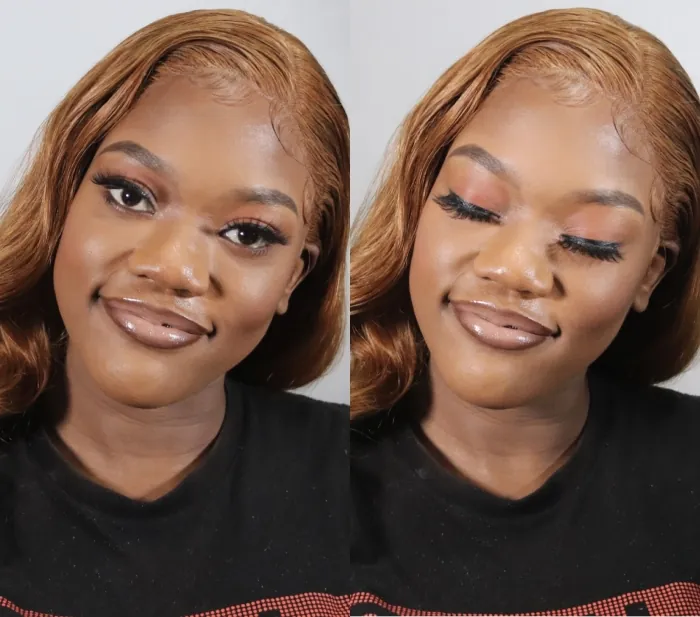
Every week someone sits in my chair with a leave out that has been flat ironed into straw. They wanted the sew in to look like their own hair, so they left a strip of it out, pressed it every morning for two months, and now the front is thinner than the back. The fix for that is the closure sew in.
A closure sew in is a weave where your whole head is braided down and covered. The bundles are sewn onto the braids, and a lace closure is sewn over the crown so the part looks like scalp. None of your own hair is left out, so none of it gets heat, and the style looks the same on day forty as it did on day one. My sew in with closure is built exactly this way.
What a closure sew in actually is
A closure sew in is three parts stacked on your head: a braid pattern, wefted bundles sewn onto the braids, and a small lace piece, the closure, sewn on top where the part sits. The closure is what makes it a closure sew in. Without it you would need your own hair to cover the tracks at the part, and that is the leave out everybody is trying to avoid.
The closure itself is a square of lace with hair hand tied into it. The common sizes are 4x4, 5x5 and 6x6 inches, and the number tells you how much parting space you get. A 4x4 gives a middle part or a slightly off center part. A 6x6 gets you close to a frontal's freedom without the frontal's maintenance. I go deeper on choosing between them in which closure size I recommend.
Leave out sew in vs closure sew in: the real difference
The only structural difference is what covers the top. A leave out sew in leaves a strip of your natural hair, usually along the part and sometimes the perimeter, to blend over the tracks. A closure sew in covers that same area with lace. Everything else, the braids, the thread, the bundles, is the same.
That one difference changes the daily routine. With a leave out, you press the strip every time it reverts, which in Queens humidity is most summer mornings. With a closure, there is nothing to press.
Who should choose a leave out sew in
A leave out makes sense if your natural texture is already straight or loosely wavy, if you only want the install in for a few weeks, or if you want to wear the hair in a high ponytail with your own edges fully out. It also makes sense if you want the most natural possible hairline and you are willing to pay for it in heat.
Who should choose a closure sew in
Choose a closure sew in if your hair is 4C or any tight texture that fights a press, if you are growing out damage or a color job, if you want the install to last the full six to eight weeks, or if you travel somewhere humid and want the style to survive. Most of my sew in clients land here once they have had one leave out go wrong.
Why the no leave out design protects your hair
Your hair under a closure sew in gets no heat, no daily manipulation and no product buildup from pressing serums. That is the whole point of a protective style, and a leave out undoes it on the exact section that is usually the most fragile already, the hairline and crown.
Braided down and covered, that hair gets the same break the rest of your head gets. When the install comes out, the front and the back have grown the same amount, which is not what happens with a leave out.
The other protection is from breakage at the blend line. A leave out is pressed thin to blend with bundle hair, and thin pressed hair snaps. If you have ever noticed a short, broken halo around your part after a weave, that is the leave out talking.
Does a closure sew in look natural
Yes, when the closure is prepped. A closure straight out of the pack has a dense hairline, visible knots, and lace that may be lighter or darker than your scalp. Sewn on as is, it looks like a closure. Prepped, it looks like skin.
Prep means bleaching the knots so the dark dots at each hair root disappear, plucking the hairline so the density tapers like a real one, and tinting the lace if it needs to match your scalp. The closure is then sewn flat and tight to the braids so the part does not lift or shift when you move. A lifted closure is the most common giveaway, and it comes from a loose foundation, not the lace.
What hair and closure to buy
Bring bundles and a closure from the same vendor and the same texture so the top matches the lengths. Body wave and straight are the easiest to blend at the closure. Deep wave and kinky curly work too, but the closure needs to come in the same curl pattern or the part will look like it belongs to a different head.
How many bundles you need
Two bundles plus a closure covers most heads at 12 to 16 inches. Three bundles plus a closure is the safe buy from 18 inches up, because longer wefts carry less hair per bundle and the ends go thin without the third. If you want a very full look, three is the floor at any length.
Which closure size
- 4x4: a middle part, the cheapest, and the easiest to keep flat.
- 5x5: a little more parting room and a more natural spread at the crown.
- 6x6: the most parting freedom in a closure, closer to a frontal look without a frontal's glue line.
If you want a deep side part or a swept back look, you are in frontal territory, and I would steer you to a lace frontal install instead of a closure sew in.
Maintenance: how to keep it looking new
A closure sew in is low effort, not zero effort. The routine is a satin scarf or bonnet every night, a wash every one to two weeks, and dry braids after every wash. Wet braids under tracks are what produce the smell and the itch people blame on the weave.
For the closure itself, keep heavy oils and edge control off the lace. Product collects in the knots and turns the part dull and gray. Use a light serum on the bundle hair only.
Wash with diluted shampoo in an applicator bottle aimed along the braids, rinse until the water runs clear, then sit under a hooded dryer until the braids are dry all the way through. Six to eight weeks is the wear; the take down timeline is in how long a sew in lasts.
Closure sew in or closure wig: which to book
A closure sew in and a closure wig give the same look from the outside. The choice comes down to whether you want the hair attached for weeks or want to take it off at night.
| Service | Time in the chair | Deposit | Removable |
|---|---|---|---|
| Sew in with closure | Booked as a studio session | 20% online booking deposit | No, worn 6 to 8 weeks |
| Closure wig install, 4x4, 5x5 or 6x6 | About 2 hours | $30 | Yes, at the end of each wear |
| Glueless wig install | About 2 hours | 20% online booking deposit | Yes, nightly if you want |
The sew in wins if you want to wake up and go for two months and never think about it. The closure wig install wins if you want to give your scalp air at night or switch looks between events. Both start with the same braid down.
Book a closure sew in in Springfield Gardens
I am Tyca, and I do the sew in with closure at the Tyca Beaute studio, 146-20 232nd St in Springfield Gardens, Queens, by appointment only. Bring your bundles and your closure, and arrive with your hair clean so we can start on the braid down right away.
Book online at the booking page with a 20% deposit, or call (973) 963-7449 if you want to talk through bundles and closure size first. The studio is open Wednesday and Thursday 9am to 7pm, Friday and Saturday 9am to 8pm, and Sunday 9am to 5pm.
Questions readers ask
Can I wear a high ponytail with a closure sew in?
Not a true high ponytail, because the tracks and the closure edge would show at the nape and the temples. A low or mid ponytail works, and a frontal install is the better choice if a high ponytail is the goal.
Do I need to bleach the knots on a closure before a sew in?
Yes, if you want the part to look like scalp. Unbleached knots show as a dark grid at the root of each hair. I bleach, pluck and tint the closure as part of the prep.
Can I swim with a closure sew in?
Yes, with a few rules. Rinse the chlorine or salt out right after, wash within a day or two, and dry the braids completely. A swim cap keeps the closure edge from lifting.
How much hair do I need to have for a closure sew in?
Enough to braid flat, usually two to three inches all over. Very short or very thin hair can still be braided, but a closure wig or a quick weave may be the kinder option until there is more length.